Ccf vs therms: convert a natural gas bill without mixing units
Convert gas volume to heat using the factor on your statement, then compare per-unit rates and calculate variable and fixed charges.
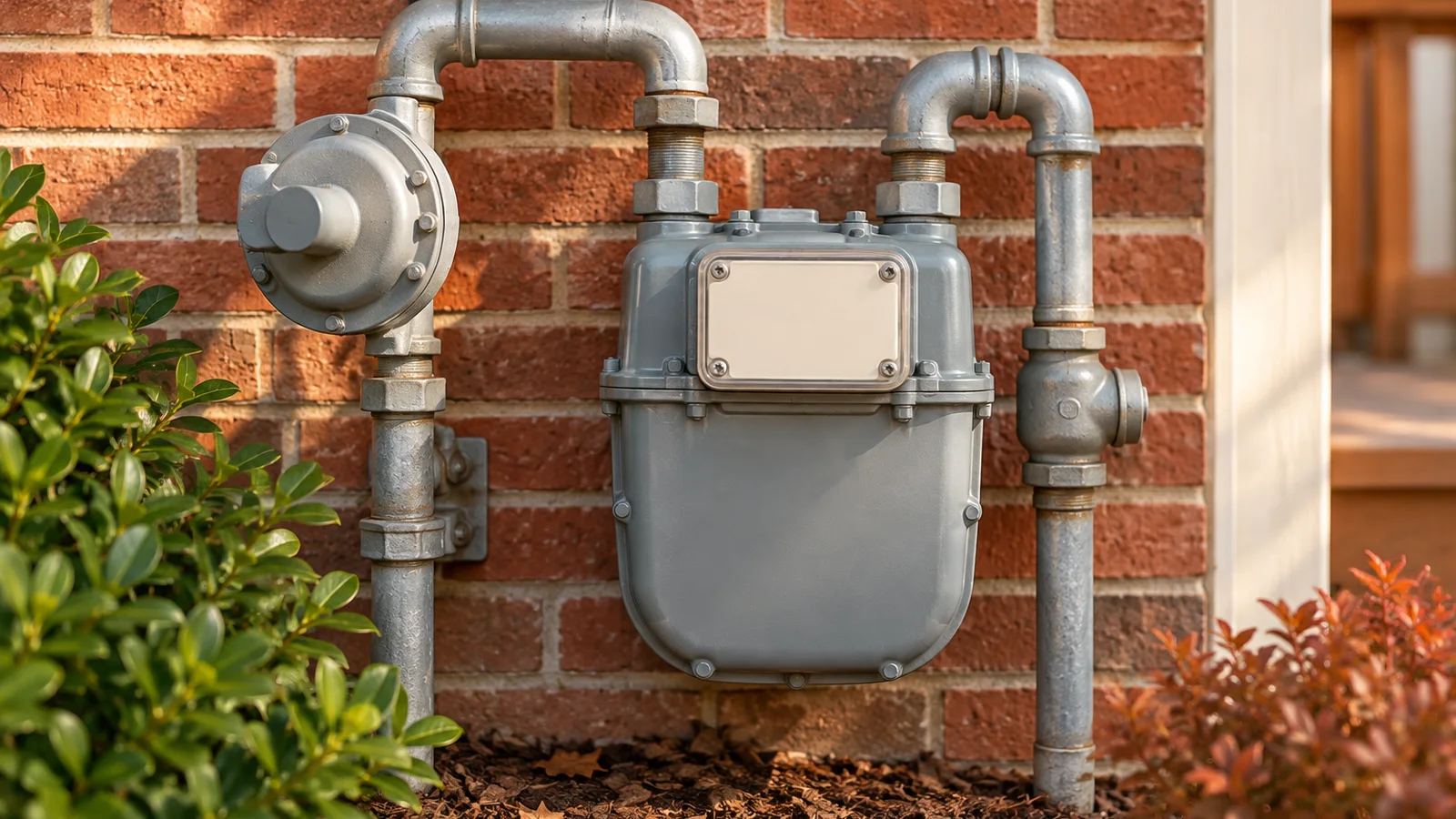
Ccf measures natural gas volume, while therms measure heat. To convert a billed volume into therms, multiply Ccf by the appropriate billed therms-per-Ccf factor. To convert a price per Ccf into a price per therm, divide by that factor. Use your utility's factor and explanation of any adjustments; a single national average is not a universal billing conversion. The distinction matters whenever you compare gas offers or check the arithmetic on a statement.
Identify the billed unit first
A Ccf represents one hundred cubic feet. An Mcf represents one thousand cubic feet, or ten Ccf. A therm represents 100,000 Btu. These unit definitions do not mean every Ccf has exactly one therm of heat. Heat content and billing adjustments matter. Read the statement's unit labels rather than inferring the unit from a price that looks familiar.
Some bills show a meter volume, a conversion factor, and a final therm quantity. Others may describe pressure or other adjustments differently. Ask the utility which factor you should use to reproduce the billed heat quantity. Do not apply an adjustment a second time if it is already incorporated into the billed factor. If you cannot reconcile the units, retain the original figures and request a written worked calculation.
Convert usage with multiplication
Illustrative example: measured volume is 50 Ccf and the billed factor is 1.03 therms per Ccf. Converted usage is 50 × 1.03 = 51.5 therms. If the combined variable charge is an illustrative $1.20 per therm, the variable cost is 51.5 × $1.20 = $61.80. An $18 monthly fixed charge produces a total of $79.80 before other items.
| Quantity | Illustrative calculation | Meaning |
|---|---|---|
| Heat usage | 50 Ccf × 1.03 | 51.5 therms |
| Variable cost | 51.5 × $1.20 | $61.80 |
| Total before other items | $61.80 + $18 | $79.80 |
| Average cost | $79.80 ÷ 51.5 | About $1.55 per therm |
The average includes the fixed charge and is not the same as the $1.20 variable rate. At zero usage, the fixed charge may remain under the tariff, but average cost per therm is undefined. The calculator shows that limit rather than dividing by zero.
Convert prices with division
If an illustrative offer is $1.236 per Ccf and the factor is 1.03 therms per Ccf, the equal price per therm is $1.236 ÷ 1.03 = $1.20. Conversely, a $1.20-per-therm rate corresponds to $1.20 × 1.03 = $1.236 per Ccf under that same factor. These figures explain direction; they are not current rates or a conversion guaranteed for your utility.
A useful unit check is to write the units beside each number. Dollars per Ccf divided by therms per Ccf leaves dollars per therm. Multiplying those prices instead would produce the wrong basis. If comparing two suppliers, also check that one price is not supply-only while the other includes delivery. Unit conversion solves a unit mismatch, not a scope mismatch.
Reconcile supply and delivery separately
Find whether the utility charges both supply and delivery per therm, or whether different components use different bases. If the gas calculator's rate input is intended to represent the complete variable charge, add only components that use the same converted unit and apply for the same period. Keep monthly fees outside the per-unit rate field.
Taxes, tiered schedules, seasonal adjustments, minimum charges, and credits may require additional lines. A bill spanning a factor or rate change can require split calculations. The gas bill calculator supports one volume, one factor, one combined variable rate, and one fixed charge. It is not a complete tariff engine. Use it to check a simple subtotal and record what remains outside the model.
Use conversions without overclaiming a heating comparison
A fuel cost comparison is not the same as a useful-heat comparison. Gas appliances and electric heating systems deliver heat with different performance characteristics, and a heat pump's performance depends on conditions. Converting fuel units alone cannot establish which heating system is cheaper for your house. Equipment, installation, climate, tariffs, maintenance, and remaining fixed charges can affect the answer.
For a major equipment decision, seek an appropriately qualified local professional and ask for stated assumptions. Do not use a gas volume conversion to imply a home needs a certain number of therms, or use a national average to promise savings. For ordinary plan shopping, focus on comparable billed units, full contract costs, and the household's actual seasonal history. That narrower task can be completed transparently with a bill and the relevant disclosures.
Preserve the factor with the period
Write the factor beside the dates of the statement you checked. If you later compare another month, obtain that period’s factor rather than silently reusing the old one. Keep the measured volume and billed therm quantity as separate entries. This makes a rounding difference or changed adjustment easier to identify without confusing a conversion issue with an actual change in consumption.
FAQ
Is the factor 1.03 always correct?
No. It is an illustrative input here. Use the factor applicable to your own billed period and utility.
Should I multiply or divide the price?
Divide a price per Ccf by therms per Ccf to obtain a price per therm. Multiply Ccf usage by that factor to obtain therm usage.
Why does my result differ slightly from the bill?
Rounding, additional adjustments, split periods, or a misunderstood factor can explain differences. Ask the utility to reproduce the specific line.
Related reading
Sources
- EIA: gas price conversions — heat content and unit-price conversion.
- Los Alamos Department of Public Utilities — an official example of billing adjustments, not a universal factor.